Our latest demo for NEC PC-9801 machines, New Horizons, has been a surprisingly large hit, especially in the scope of the Japanese PC scene. It is clear that the effort we put into it has been worth every drop of the team's blood, sweat and tears. As a form of gratitude to fellow sceners keeping it at the top of the October 2026 prod list on pouet, I thought it'd be good to make a write-up covering the pre-production of the demo, as well as the process behind the creation of the opening act.
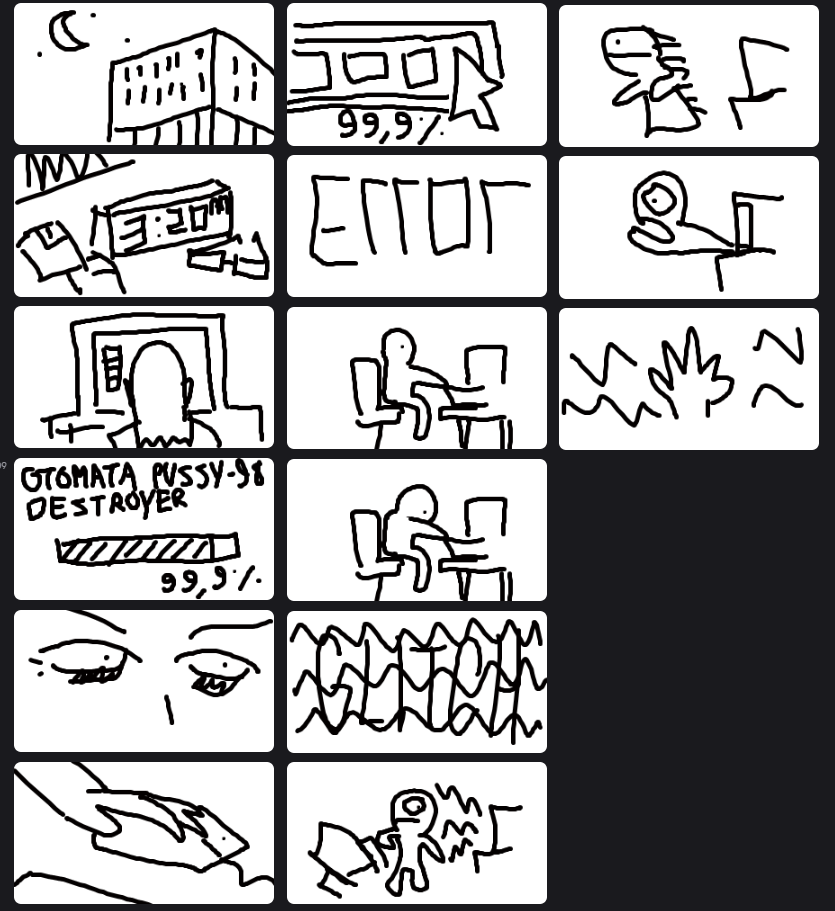
All good animations are planned out, usually in the form of a storyboard. Early on, Grongy and I were coming up with ideas on what would make for a good build-up to the demo's main act. Naturally, some things were considered and others immediately thrown out, but we didn't really have anything until he came up with these panels:
This might not be what you'd usually call an adequate storyboard, and it does deviate quite a bit from what ended up being made, but it was a very important jumping off point for my animation. That said, these panels were made in April, several months before the demo actually entered full production. Up until June, we were still trying to figure out the actual flow of what we wanted to make, plus Natt and Artyomka were still trying to get a grasp of 16-bit PC-98 DOS development fundamentals. I was also experimenting with some text-based effects that would end up being used for the falling animation in the main act.
Full production officially began on July 24th, when I declared to the team that we would begin work on the demo as if it were a music video, with a fully vocalized song carrying the flow of the prod, and that I hired a pair of songwriters from the Vocaloid scene to help out. Surprise surprise, New Horizons was meant to be something completely different at first! As you might already know from seeing the final product though, this idea ended up not materializing due to various organizational and development difficulties, but while it was still under consideration I had to pull quadruple duty of getting everyone in sync with their part, guiding the coders on the platform's peculiarities, doing hardware tests, and animating the opening.
Apart from Grongy's panels, I had to pretty much start off with no material whatsoever. No assets, no reference anims, no finalized plan. With only 2 months left on the clock, this would've been a huge undertaking for one person, so I had to come up with an efficient compromise. Luckily, my previous experience with MikuMikuDance as well as production of a (now halted) animated web series, specifically designed to look like a PC-9801 program had given me a foundation for the production pipeline, which would amount to animating the scene in 3D first, then re-drawing hand-picked frames in 2D with simpler coloring to better target PC-9801VX specifications.
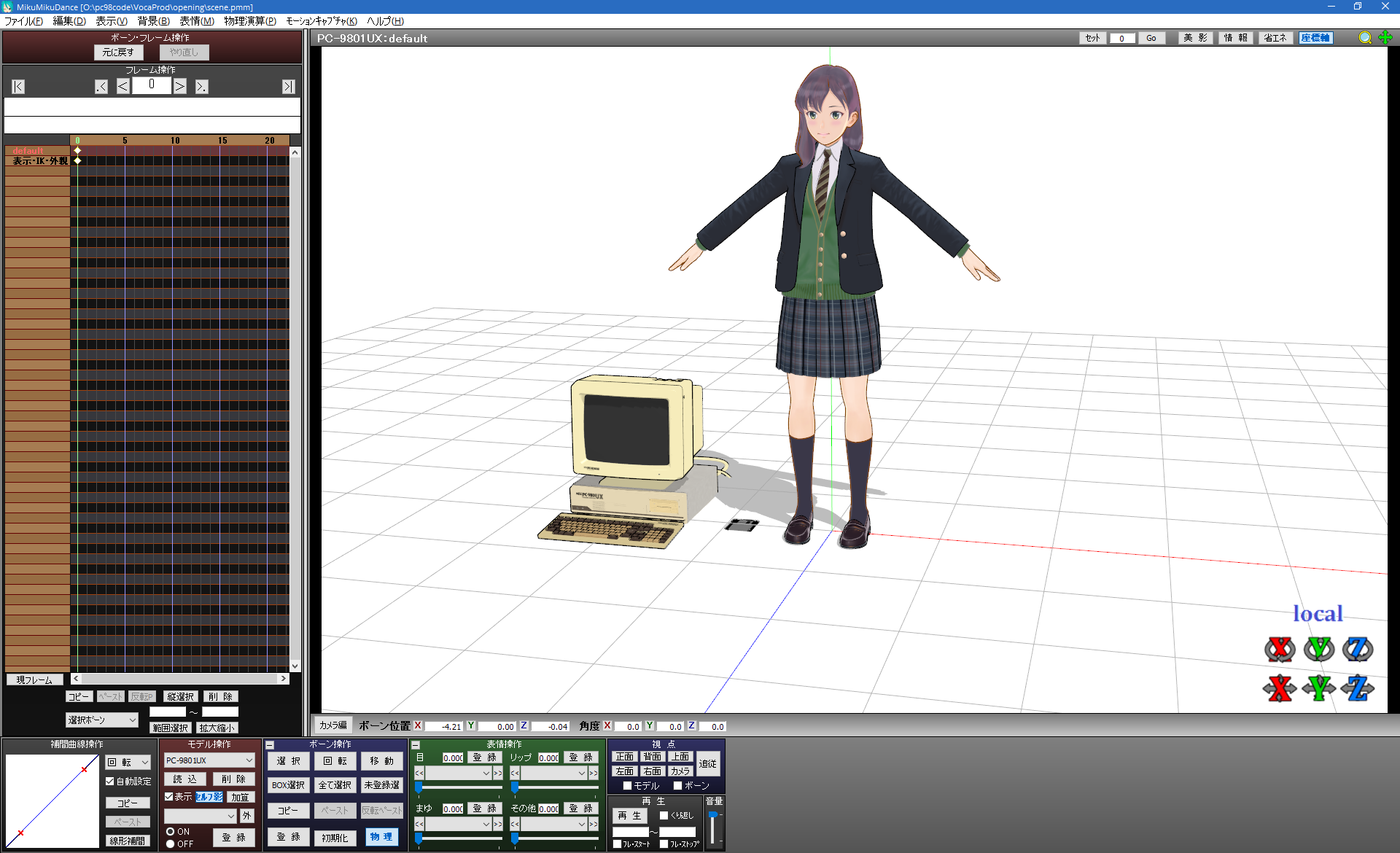
The asset problem needed tackling as well. My familiarity with the MikuMikuDance ecosystem meant a lot here, because I was well attuned to the rules of the culture, and I knew where to look regarding models that were free to use for non-commercial purposes. Since half of our group are massive weebs, we agreed on a school-age girl being the main character. Not long into my hunt for an adequate model, I came across this. It was perfect, exactly what we needed for the kind of scene we had in mind, and to top it off the usage license didn't constrain us negatively at all. We still needed a computer of some sort, ideally one that'd fit the target platform spec wise. Lucky me, I found a really good match here. CC Attribution, very easy to follow!
And so, we had our first two assets ready:
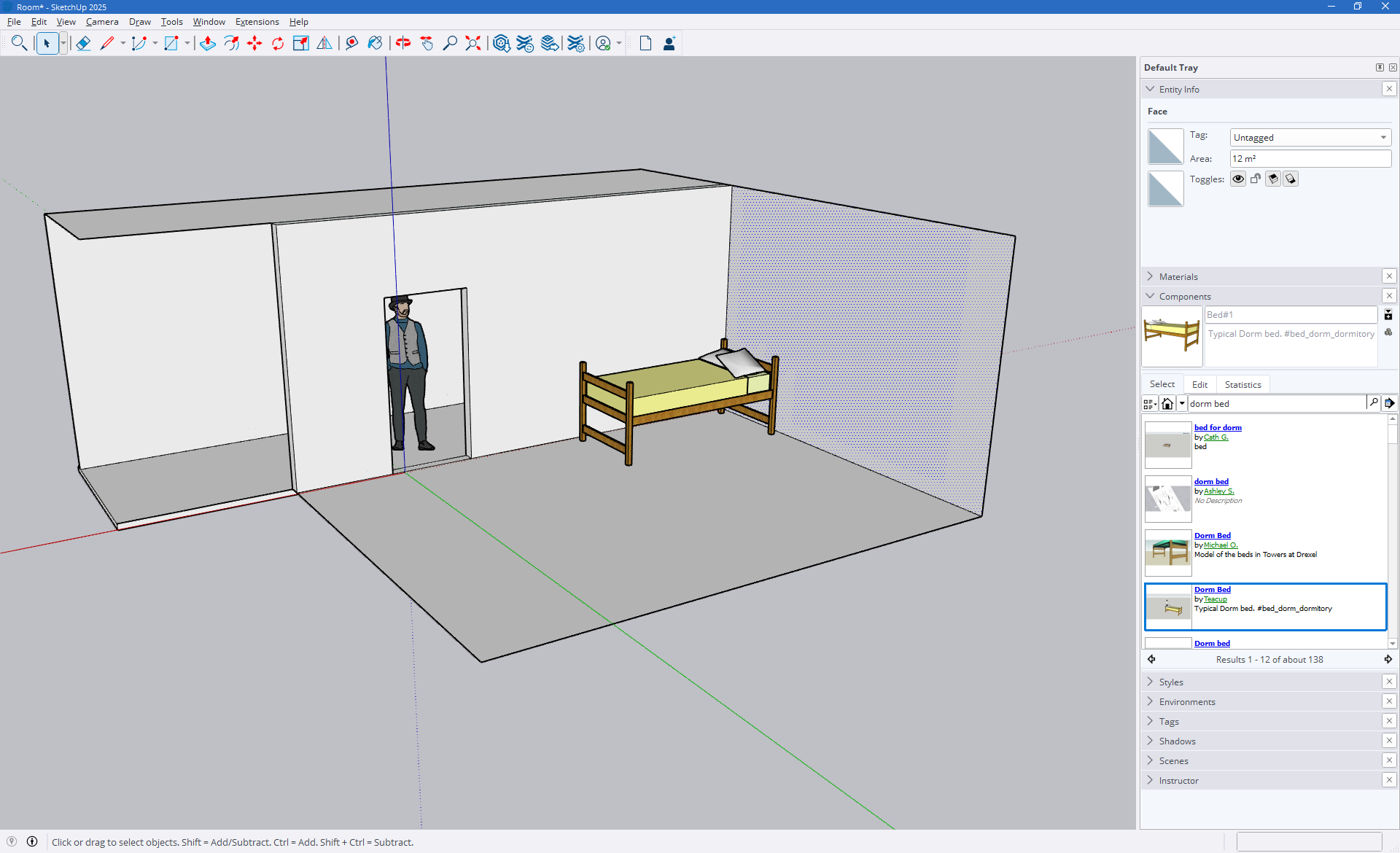
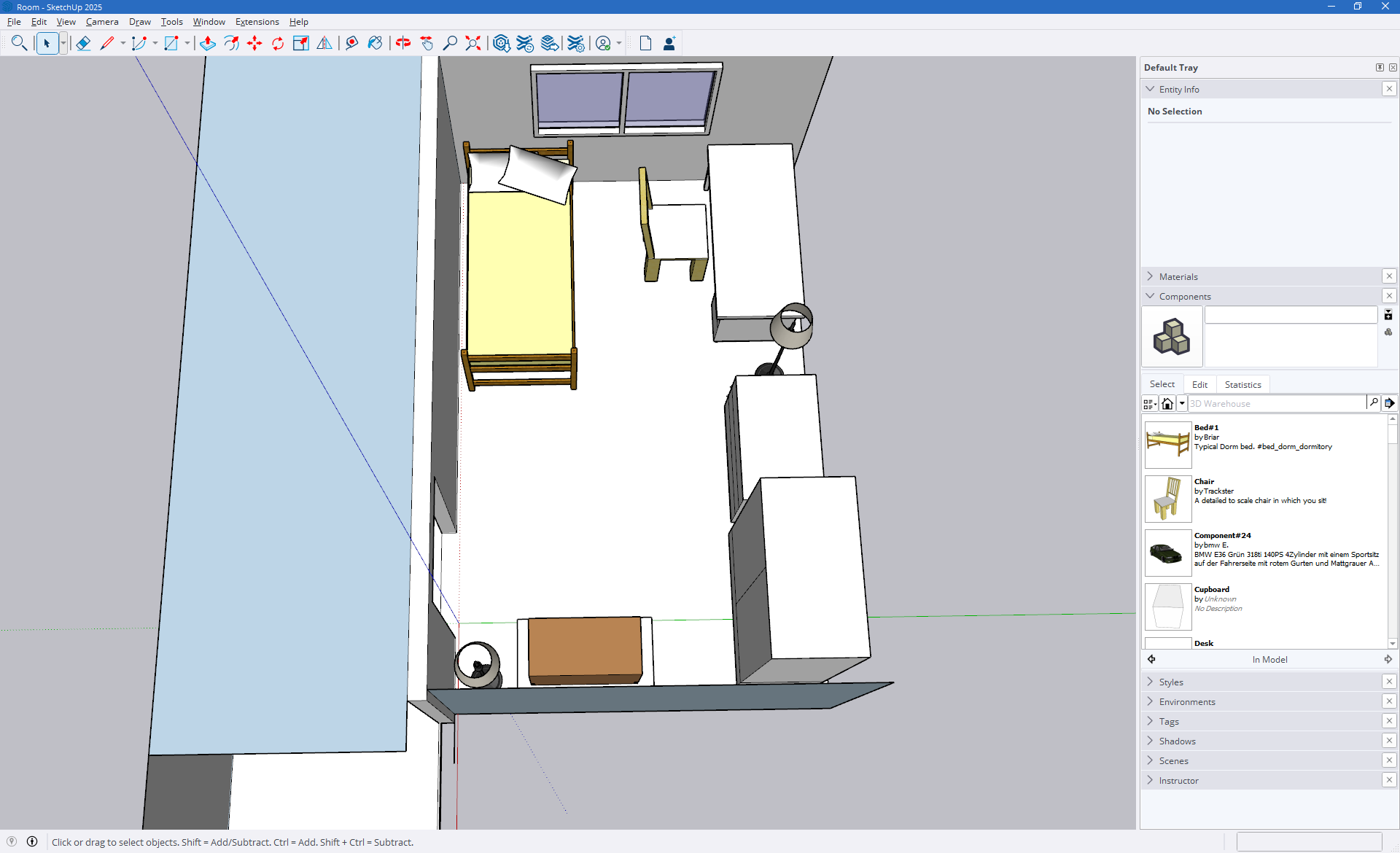
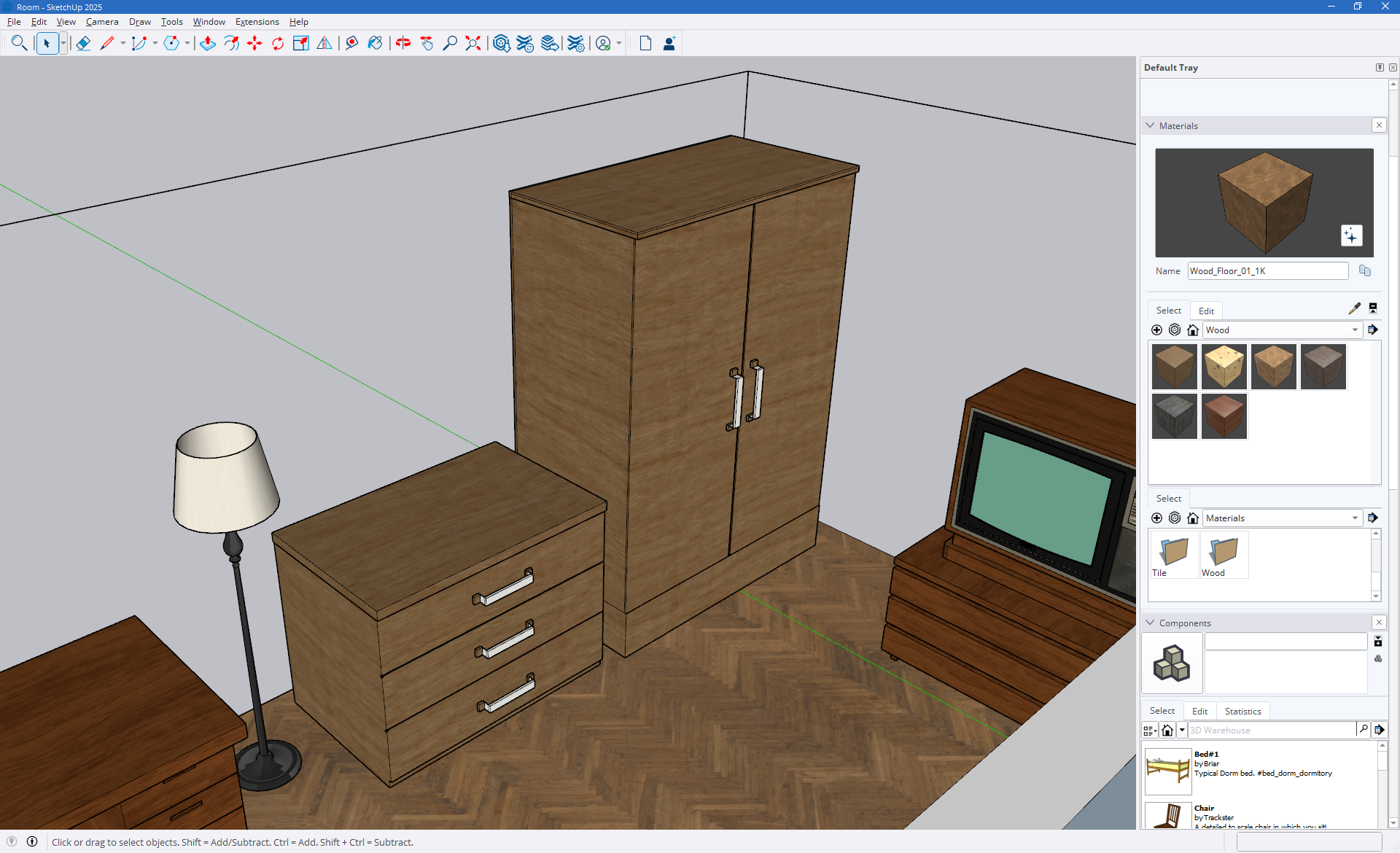
However, we can't have everything take place in a white void, which is why we need an environment. For this there was no way other than to roll up my sleeves and start modeling. The smart and experienced artist would probably pull out something like Blender. I'm anything but that so I decided to rewind to what I had previous familiarity with, which ended up being SketchUp, a program I hadn't touched in nearly 10 years but could still somewhat skillfully operate, as if I never stopped using it. For July 25th, I had posted my first work stage for the actual scene:
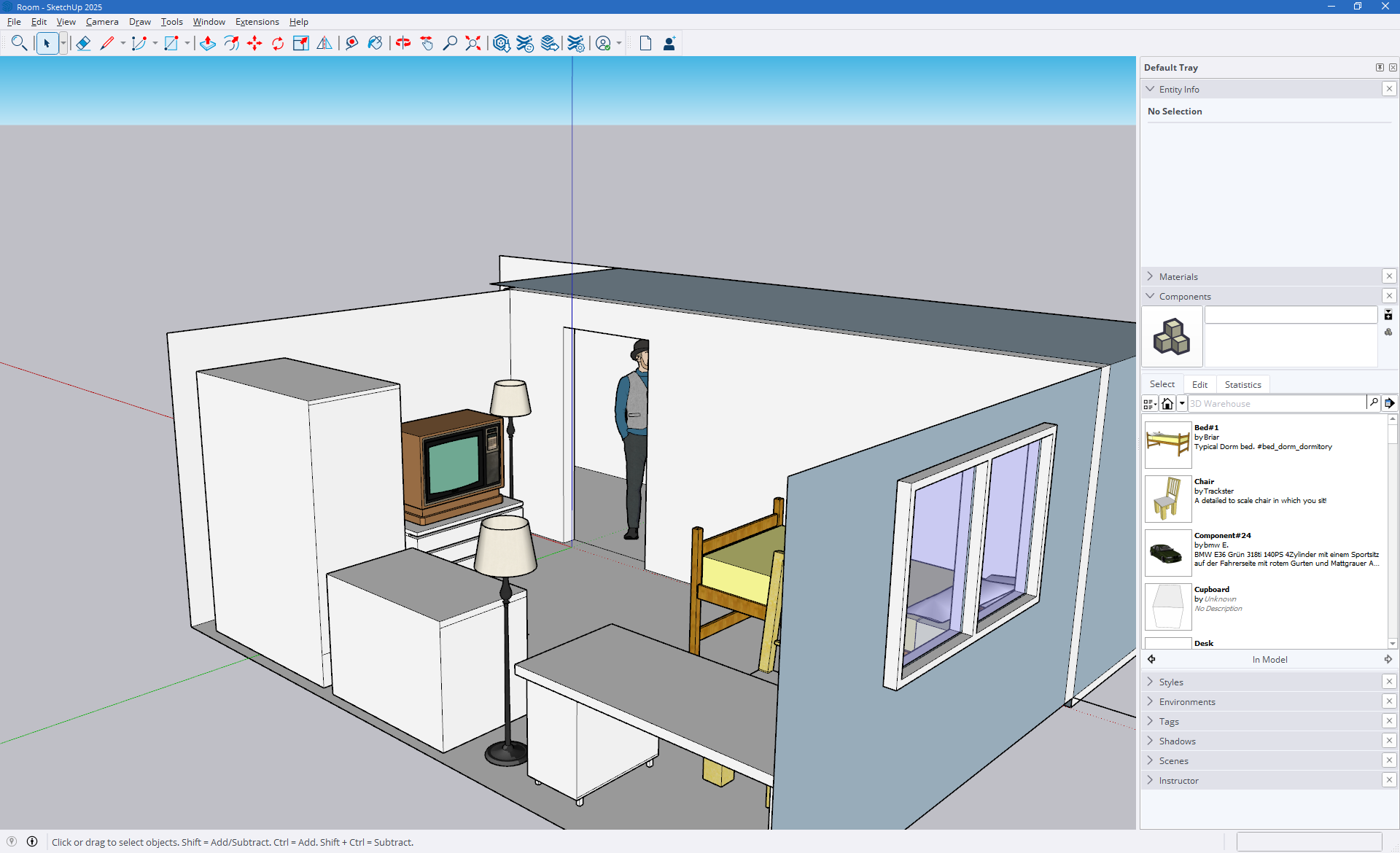
Another benefit of SketchUp is the vast library of community-made royalty free assets that can be used to fill up a scene. For certain objects I went with this route, while for other props I ended up modeling them myself. As the day went on, I filled up the space some more and gave it some textures:
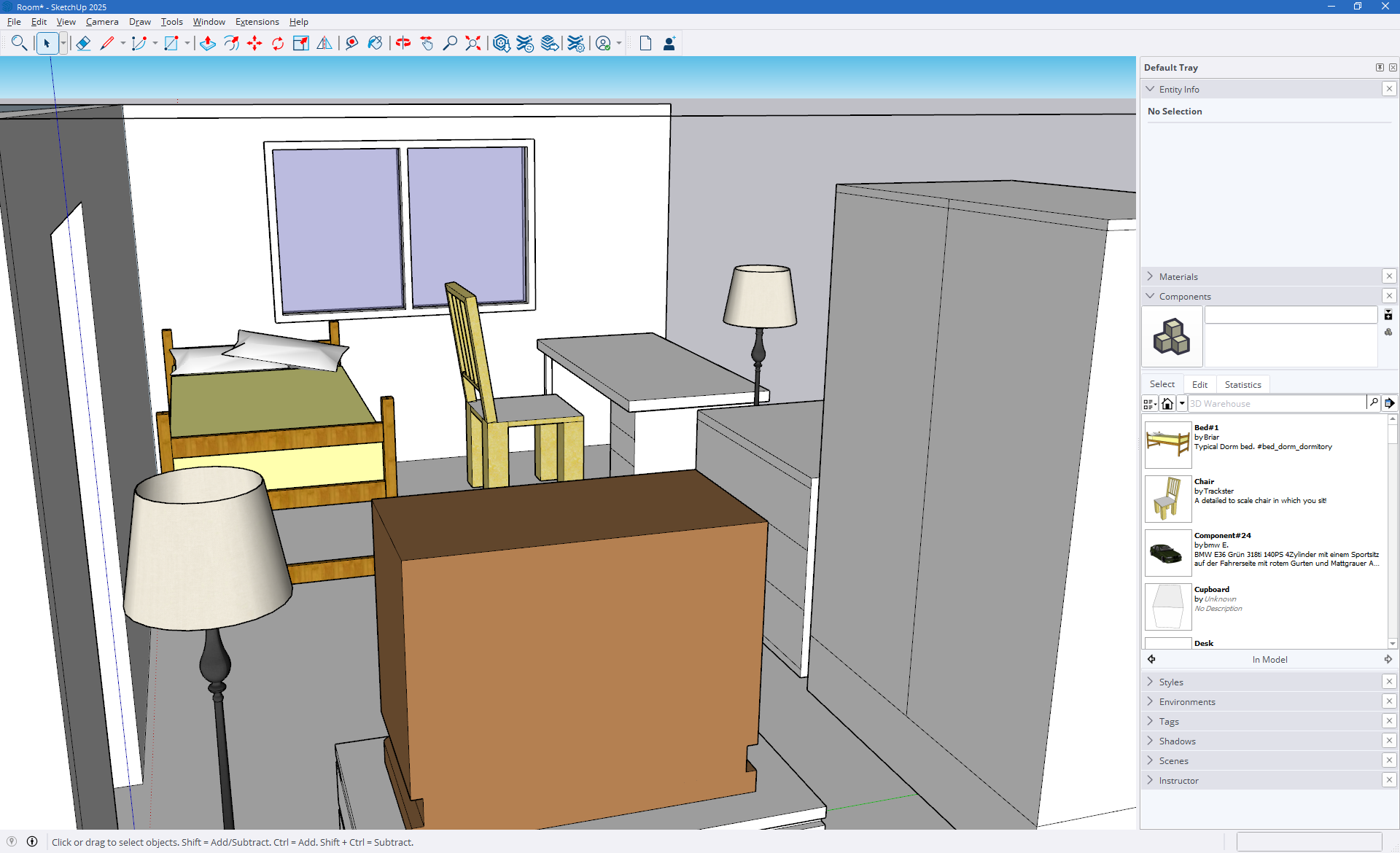
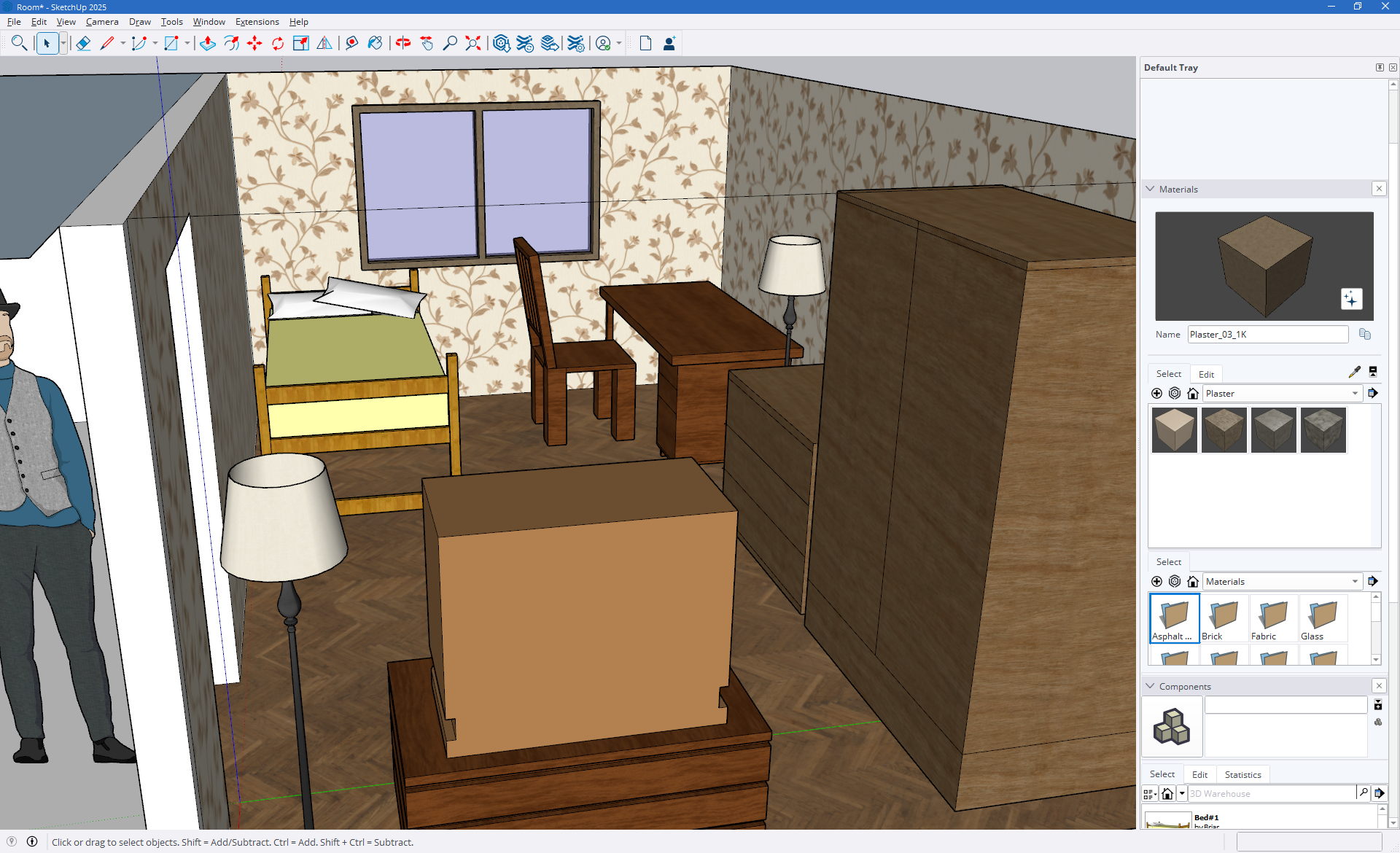
A bit of conversion done through Metasequoia later, and I was able to relatively easily import the newly modeled room into MMD:
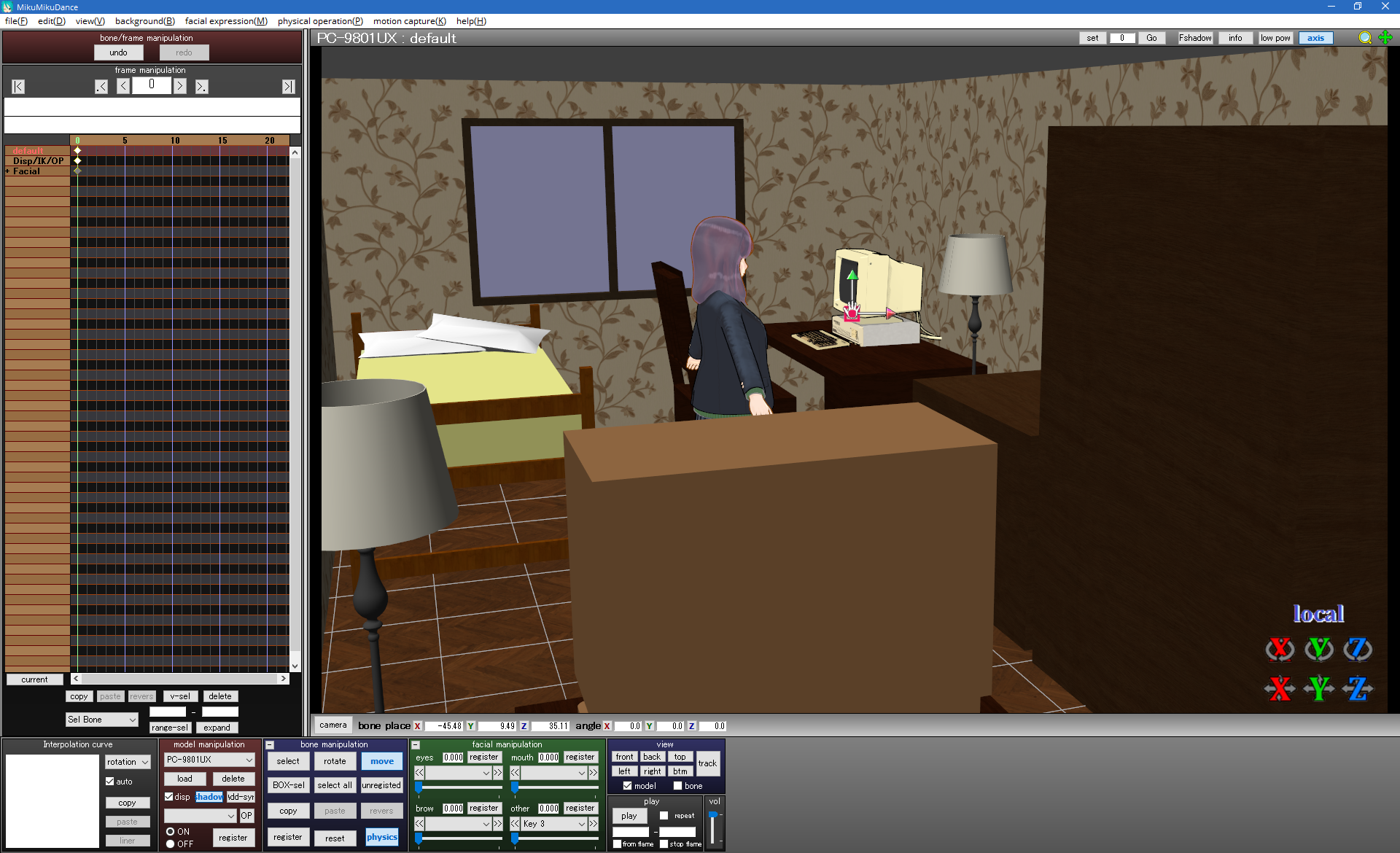
With this, I had most of the important pieces in place, but I wasn't quite satistifed yet. Over the next two days I modeled some more props, added detail to the walls of the room, and adapted a wooden door from SketchFab into an actual animatable object in MMD, using PMXEditor:
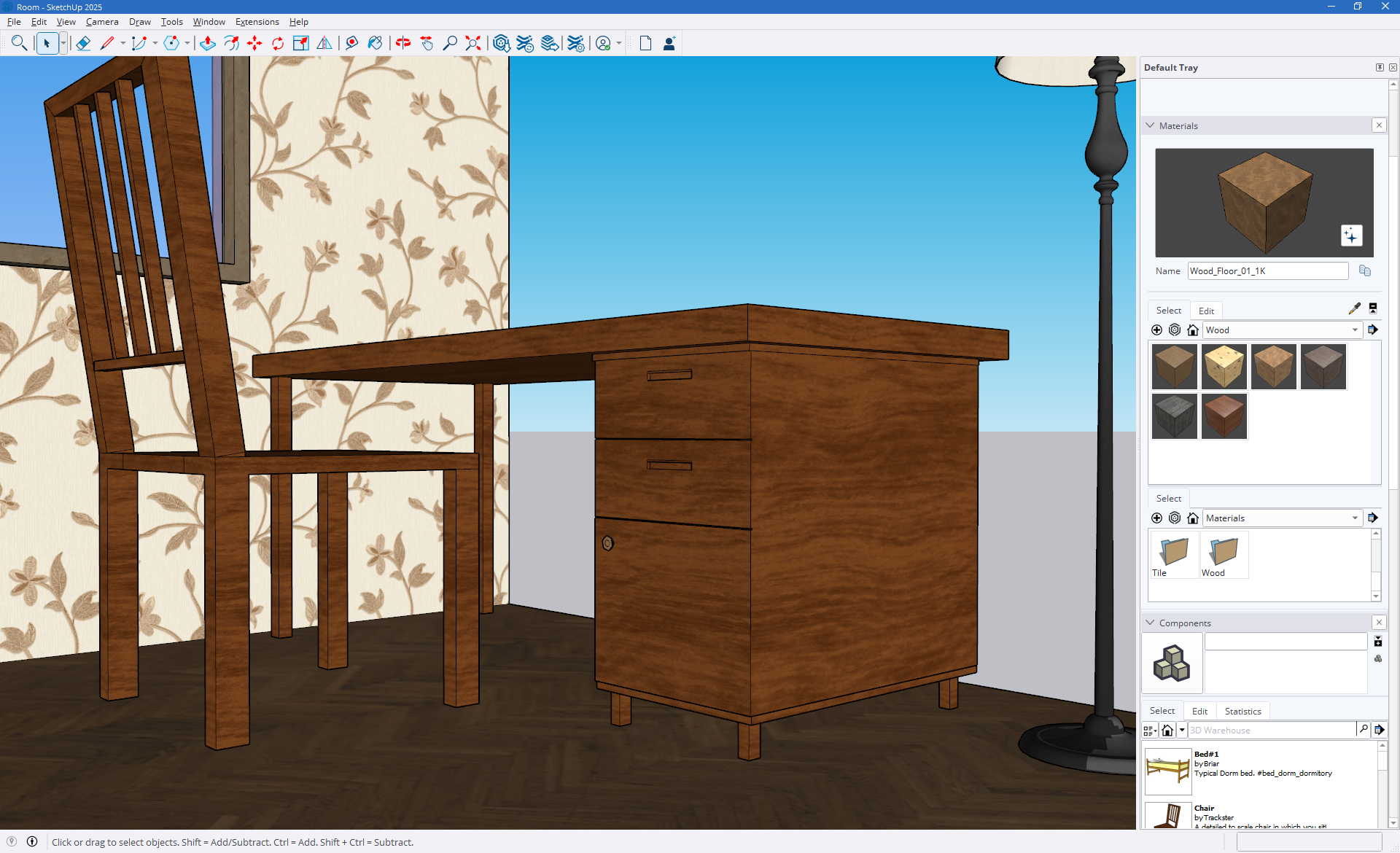
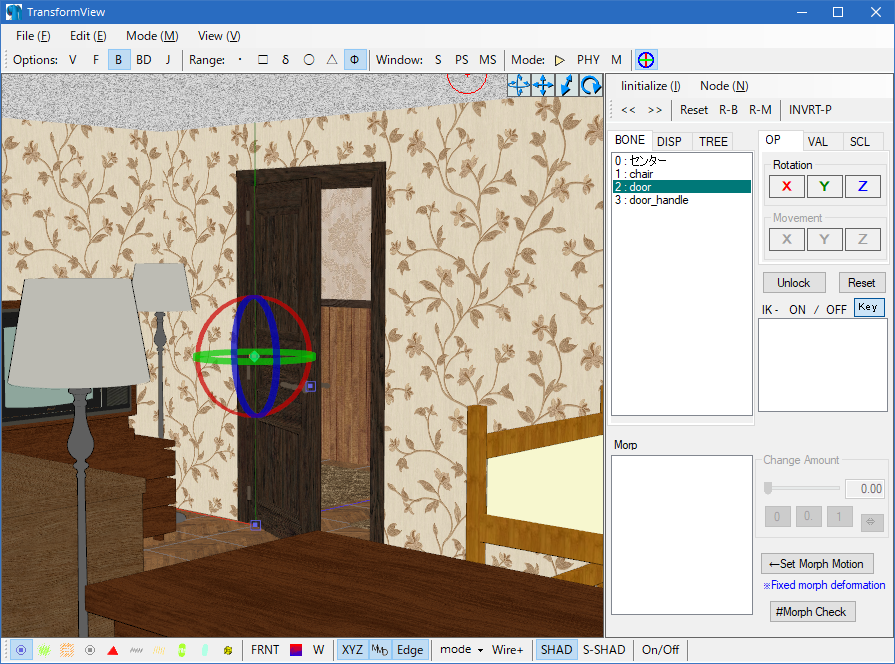
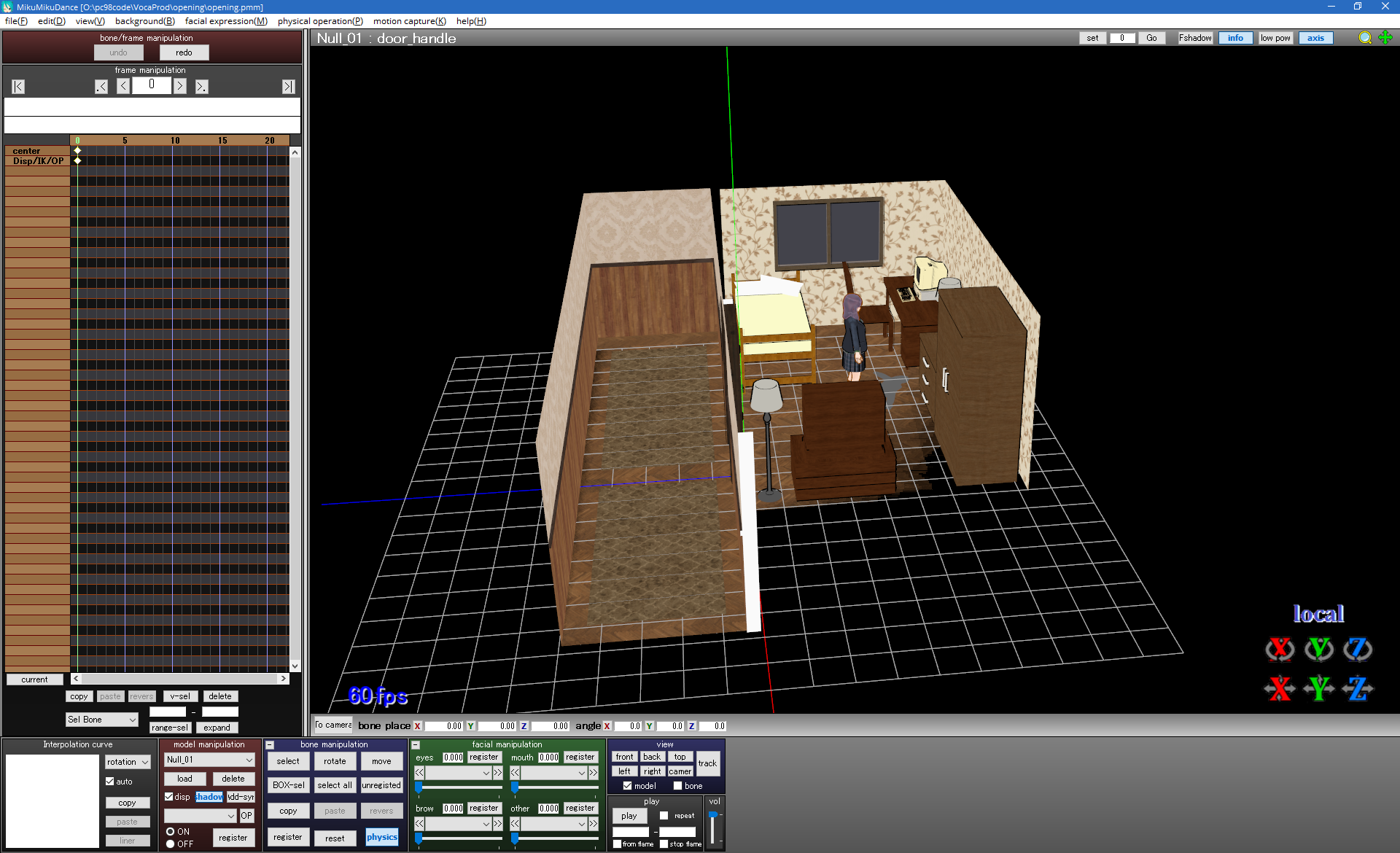
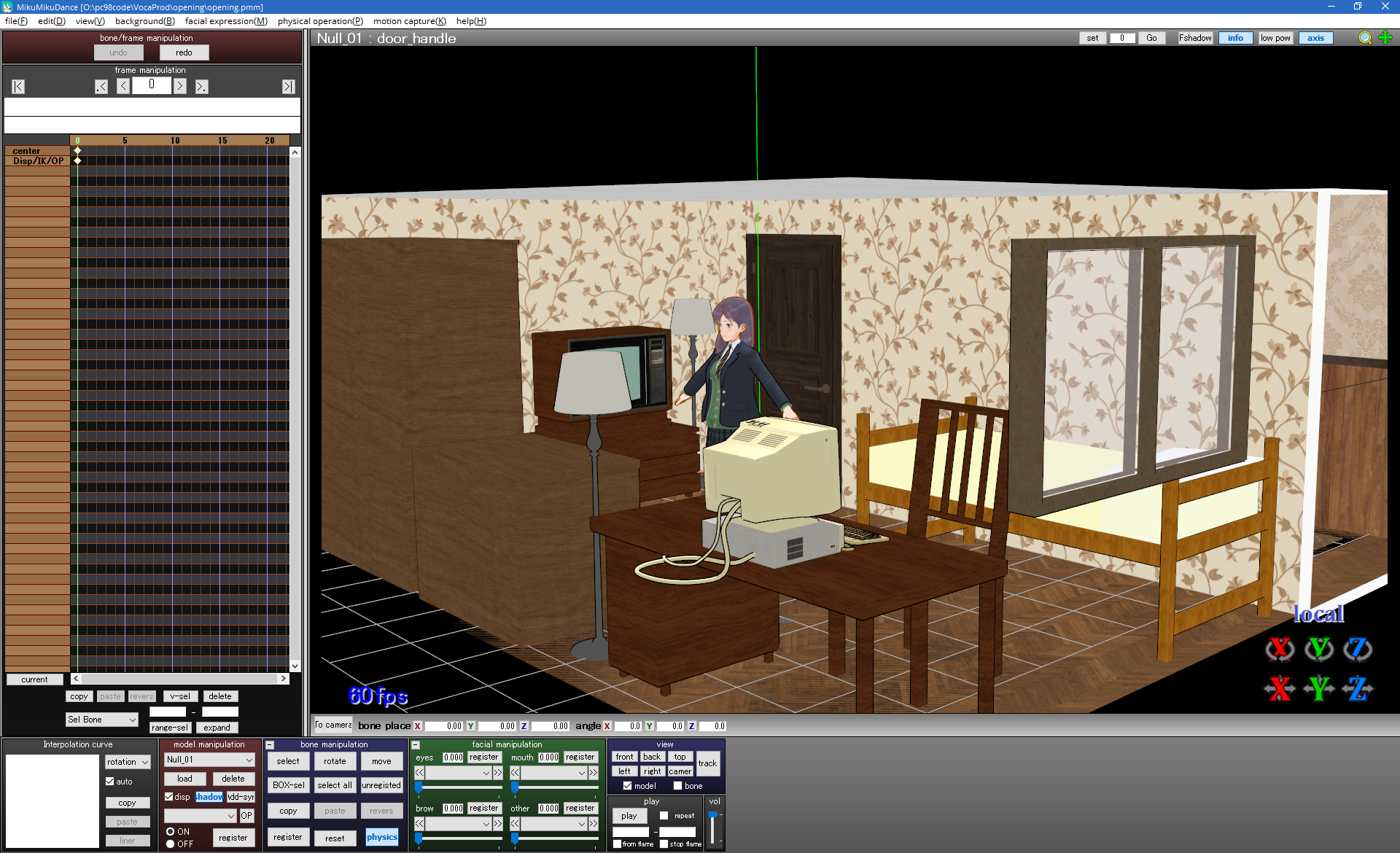
Finally, the stage is set for animation within MMD! Of course, I had to touch up some details for my props and work out the basic "lighting" (really just environment color) as it went on, but by July 29th I had animated the very first shot of the scene:
On August 1st I had finished the motions for the second shot as well:
Now here's something interesting, a scrapped attempt at animating shot 3 made on August 4th! I was going for a jump onto the bed, but this proved not only very complicated to animate given my skill level and the time constraints, it also just didn't look very good:
By August 7th it was clear that my initial attempt on shot 3 wasn't gonna work out at all, so I scrapped all of it and went with something more modest:
On August 12th, Natt requested an aspect ratio change so that less of the screen would need drawing pixels. This was rather trivial to rework, and it was already time to start creating key frames anyway. Later that day I uploaded the very first GIF-ified version of shot 1, and the day after I uploaded a half-finished 2D re-animation of said shot:
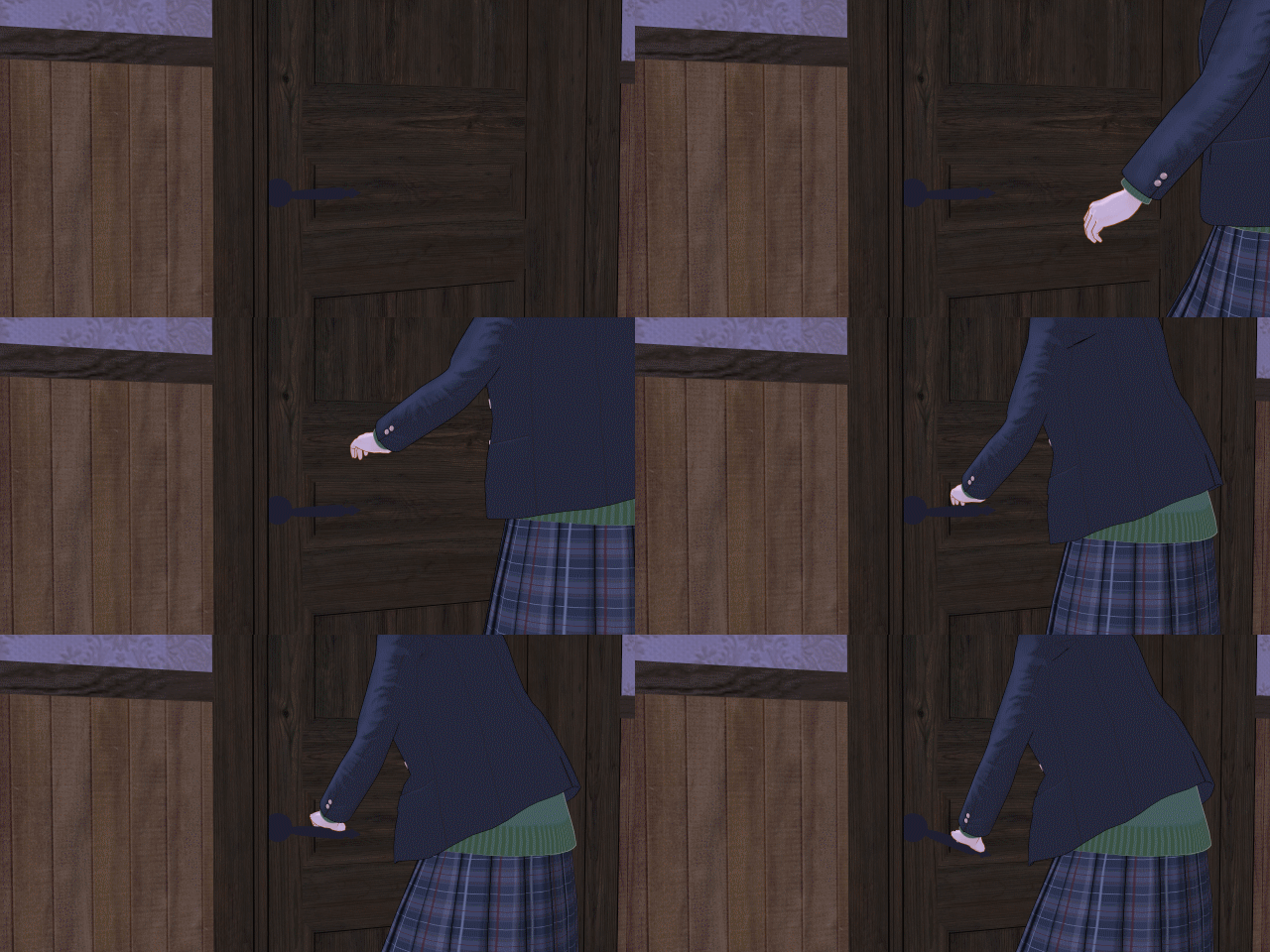

By August 15th we'd have the very first GIF of 2D animated moving objects composited with the 3D background. This is what Natt used for developing the ZX0-based real-time animation player going forward:
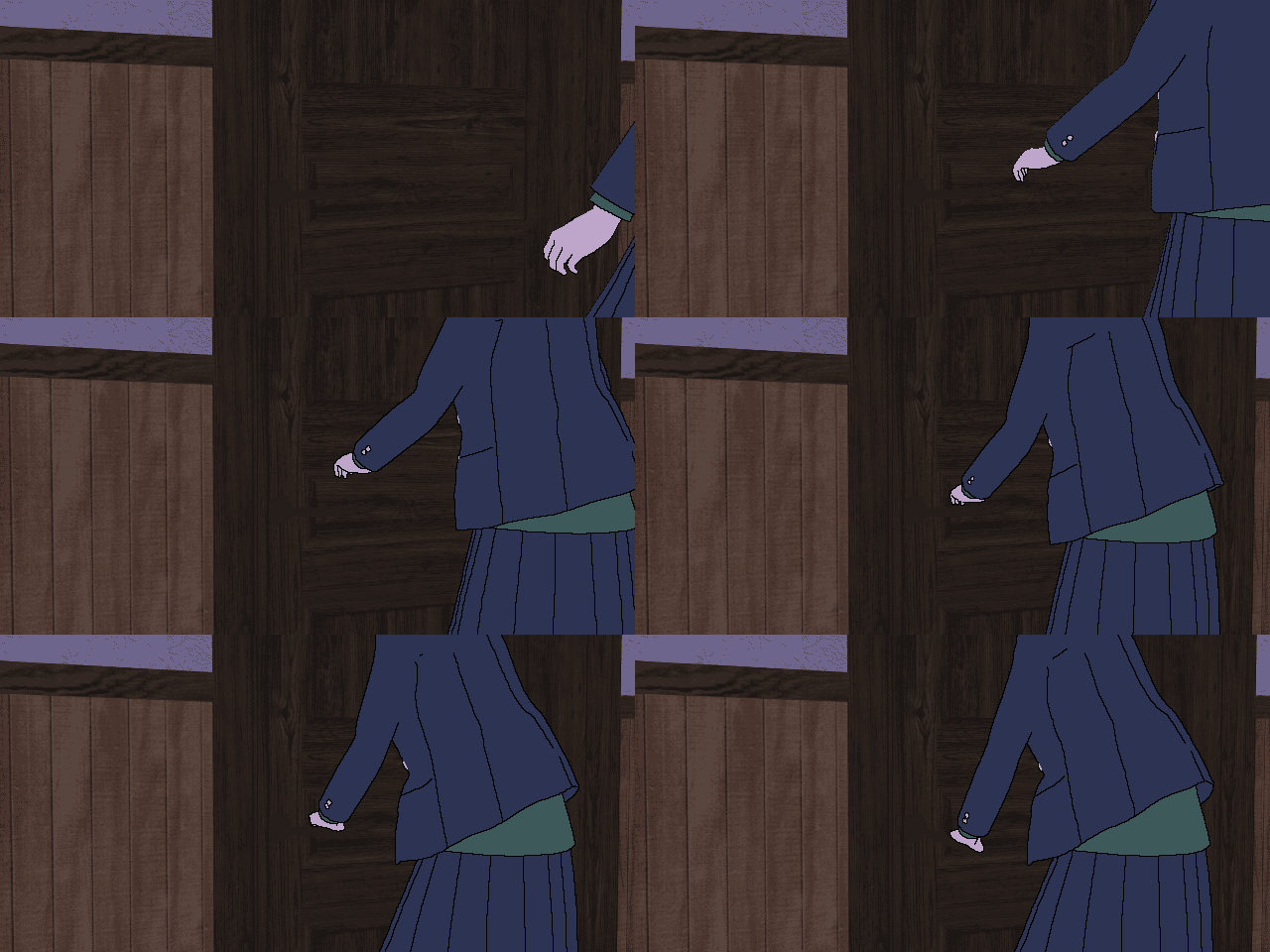
It was with this where Grongy wisely turned my attention to the way I handled the line-art. It was too thick and jagged. I initially dimissed his concerns, but later realized that his approach was indeed better, and would use it for 2D re-animating all subsequent shots. You can see a comparison below:

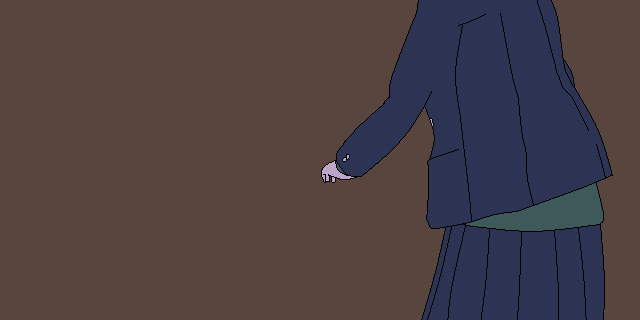
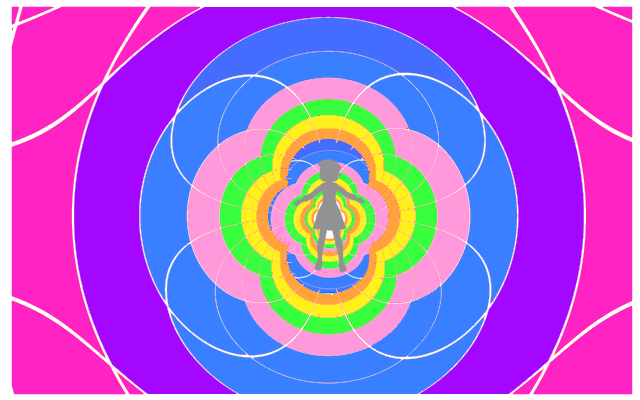
Animating the opening had slowed down a bit. Life stuff was getting in the way as usual, and this kind of work can get rather exhausting and mind-numbing, so on August 19th we decided to come together and think of what would make for a good transition from the opening act to the main act. We wanted a tunnel but were unsure of what kind. I proposed the following concept art, which ultimately ended up being rejected in favor of the final, much better "3D" tunnel:
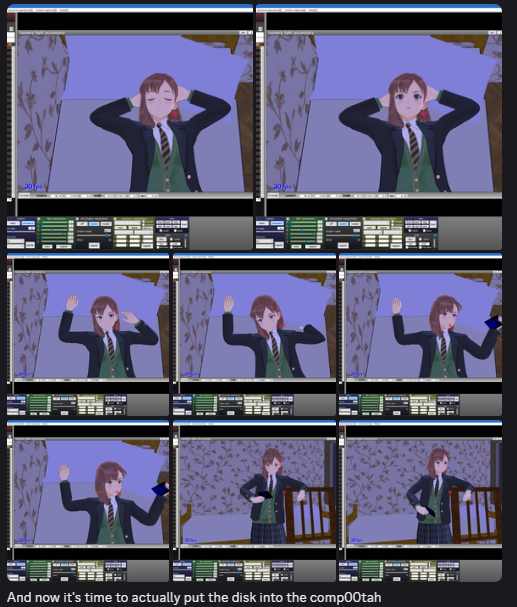
I gathered some strength later that day and managed to finish 3D animating shots 3, 4 and 5:
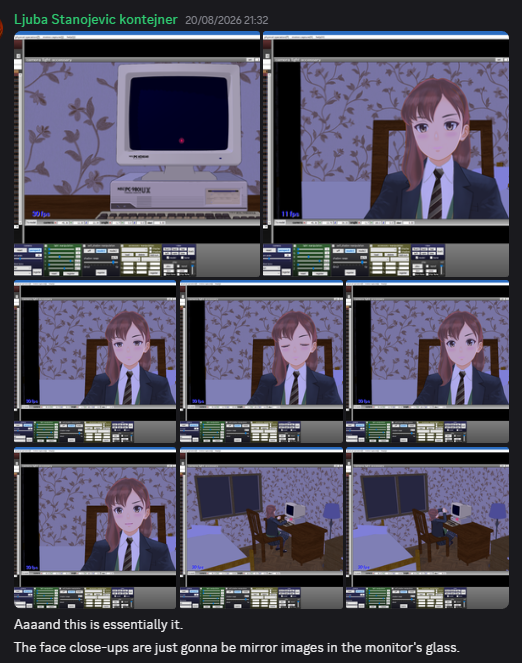
Finally, on August 20th all of the 3D animation was complete. In the set of screenshots below, you can see an unused shot that was facing the computer head on:
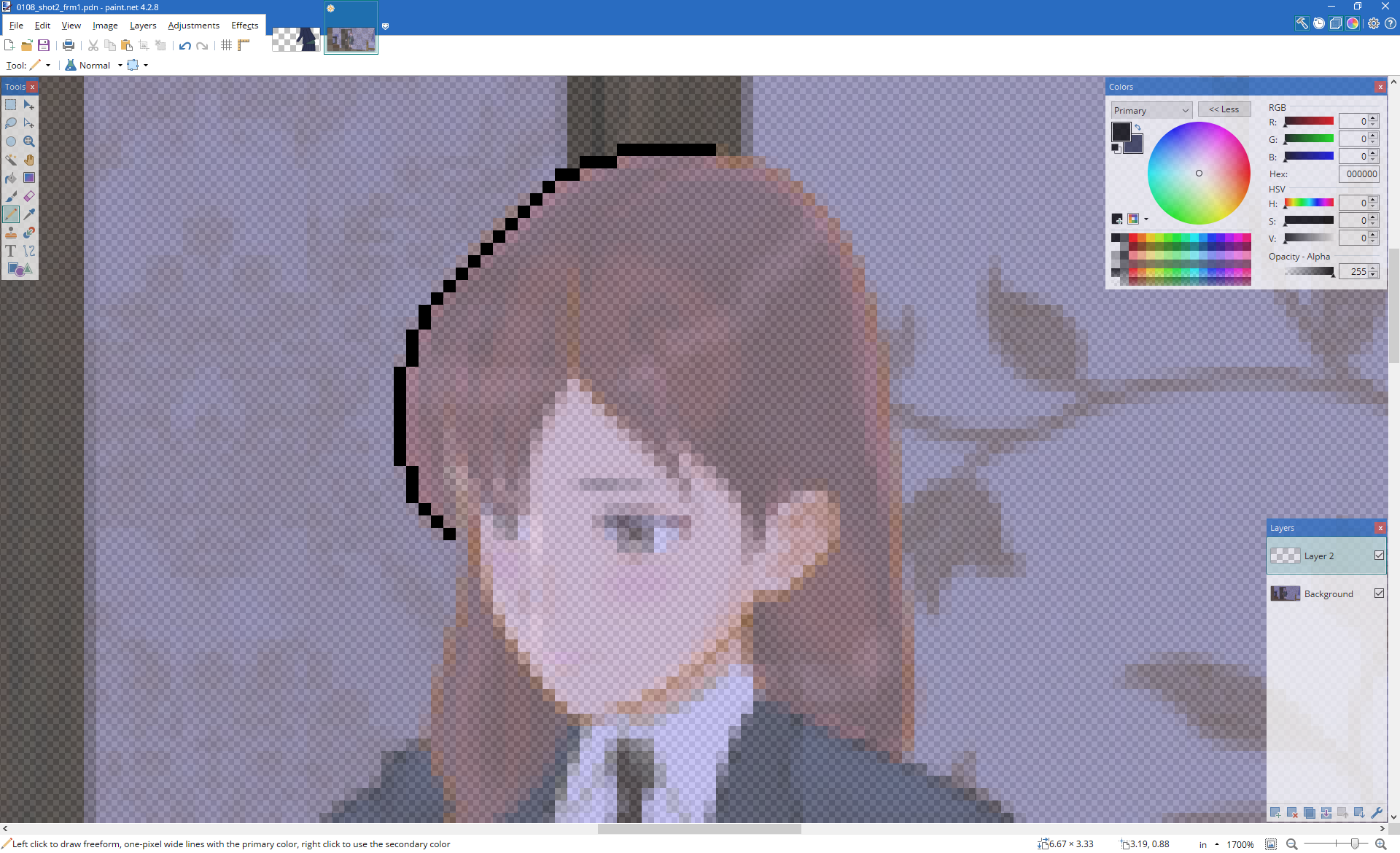
August 22nd is when I'd start 2D re-animating the rest of the opening. The process would look something like this - I'd import a given rendered frame, downscale to 640x320, then draw over the character in a separate layer, later to be composited with a color bit-crushed background. Rinse and repeat this process 93 times in total to get all of the animation frames finished!
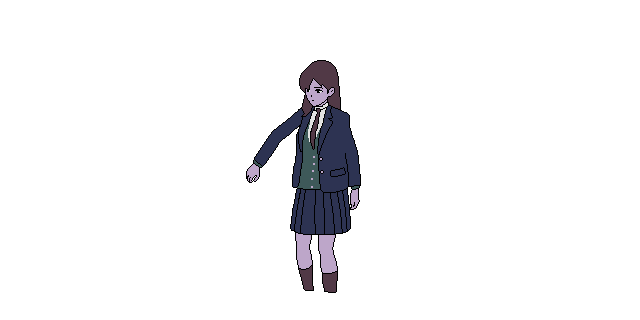
I'll keep the rest of the timeline described in brief.
August 22nd (again):
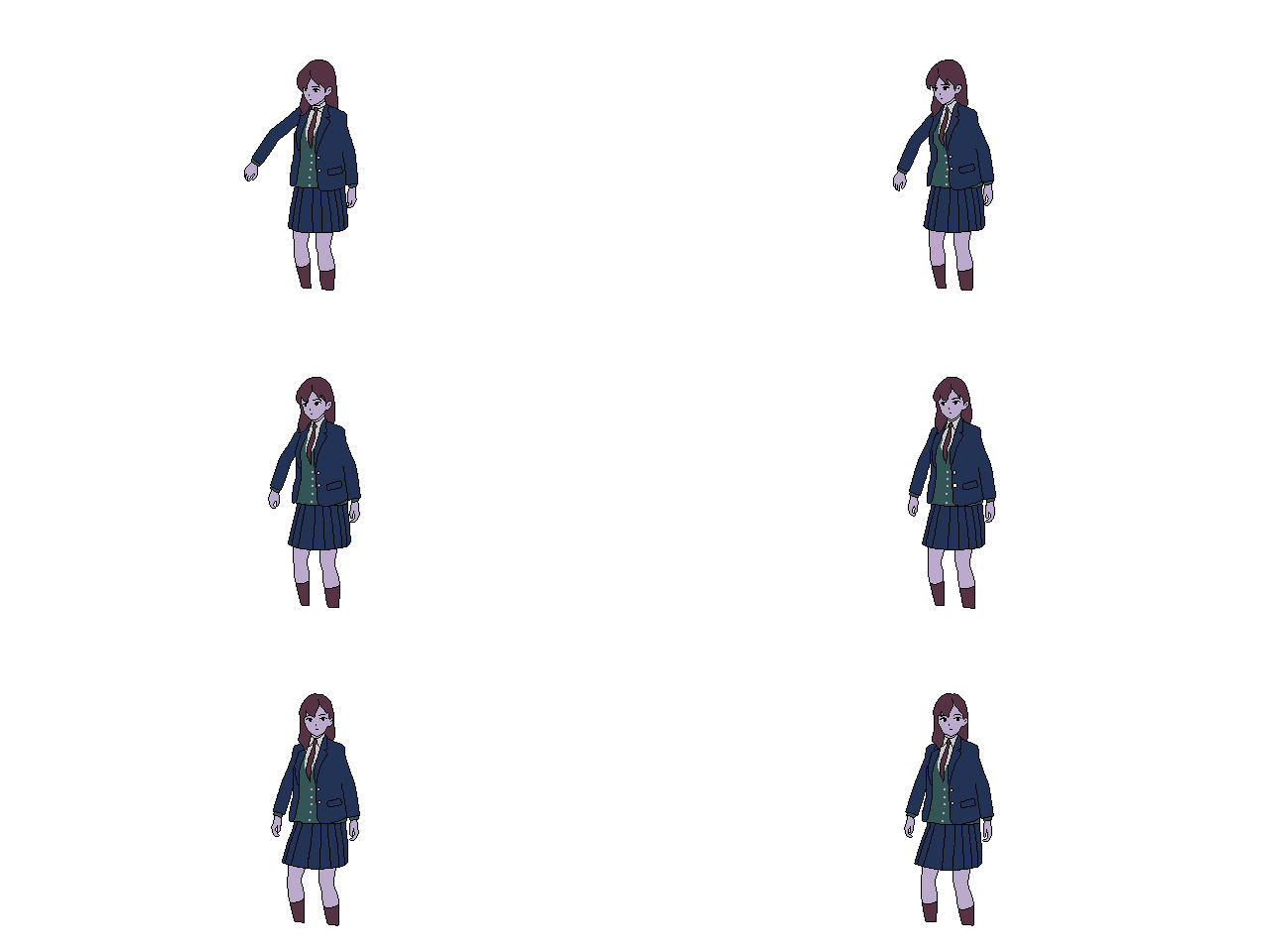
August 27th. Yes, it really did take me that long to finish:
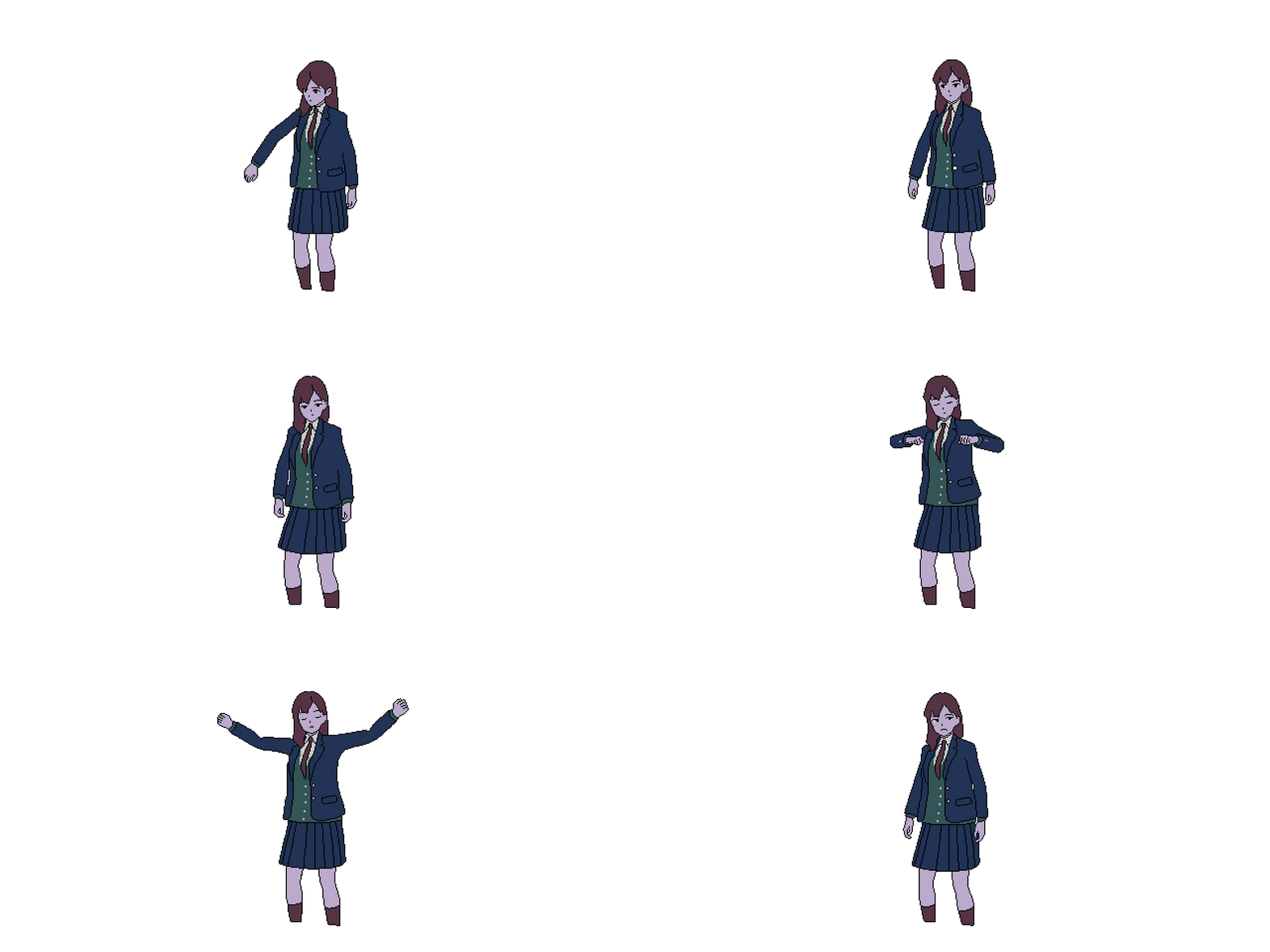
August 28th:
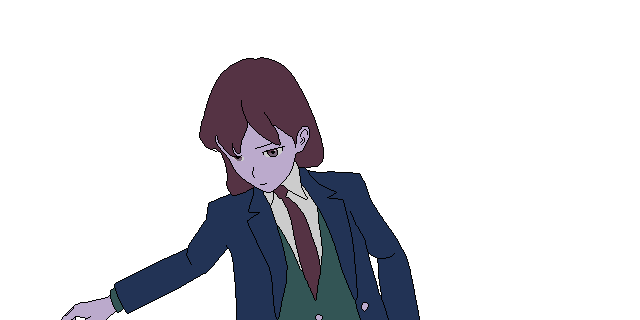
August 29th (first 3 shots progress report):
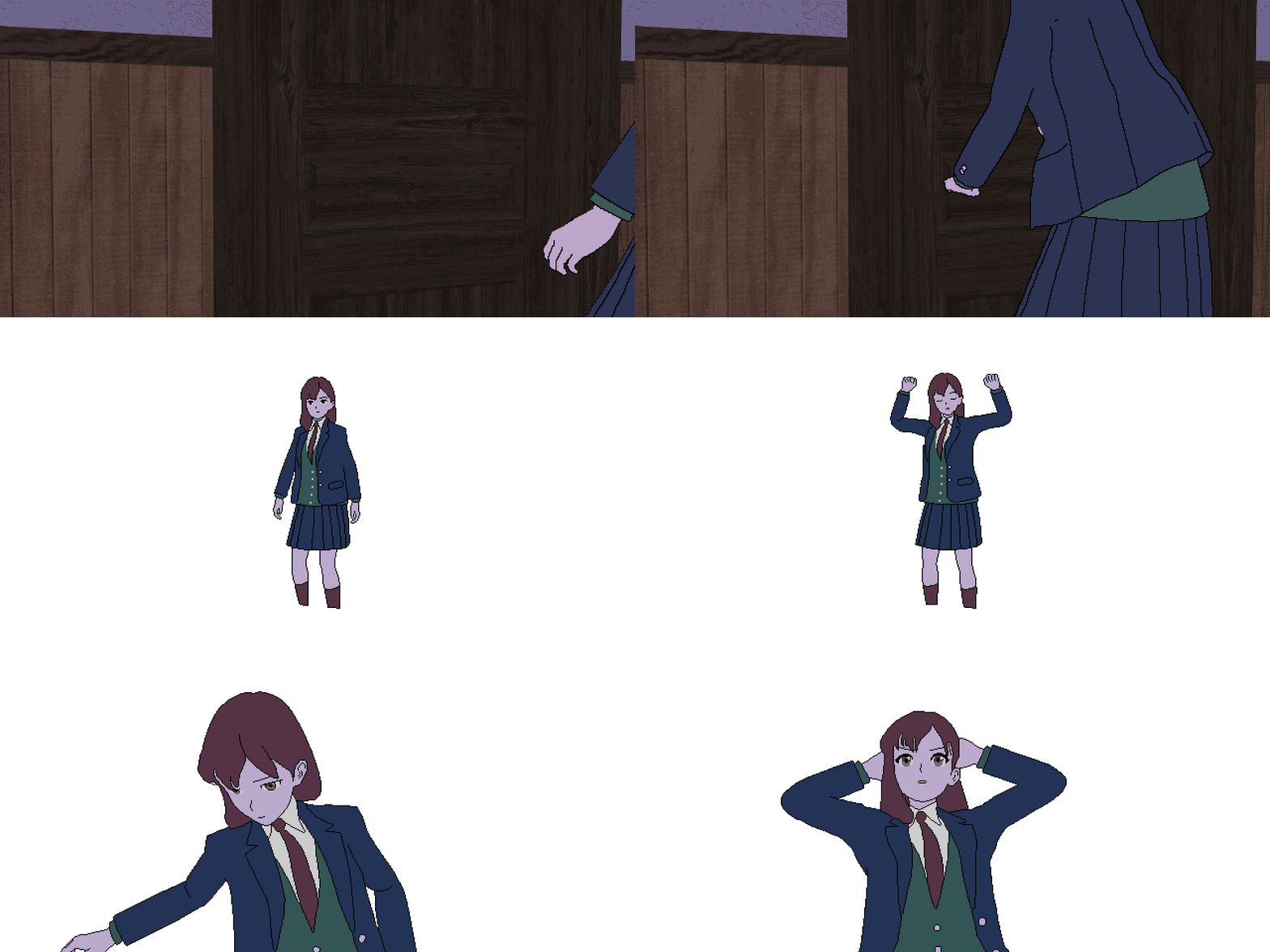
August 31st:
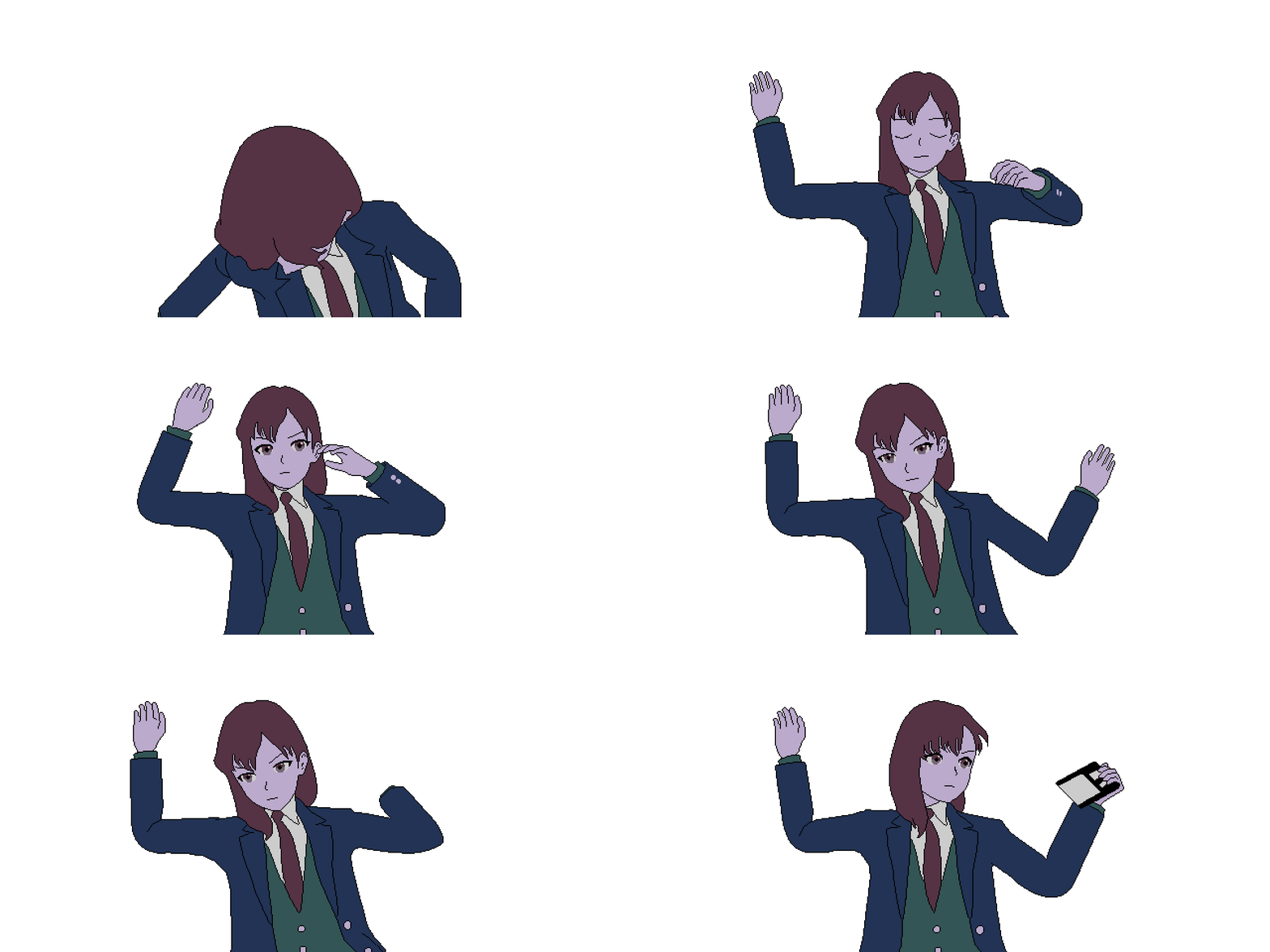
September 4th:
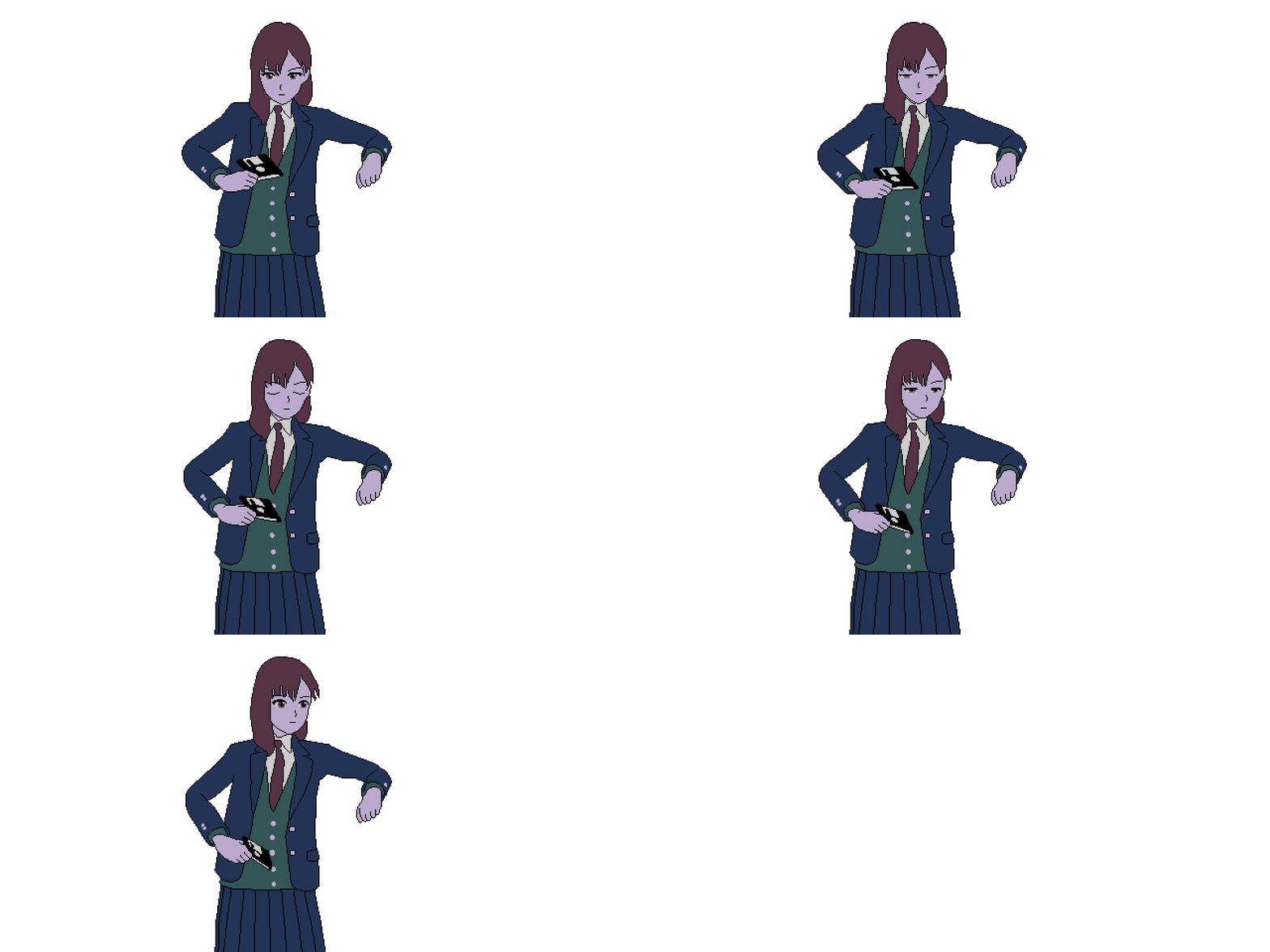
September 12th:
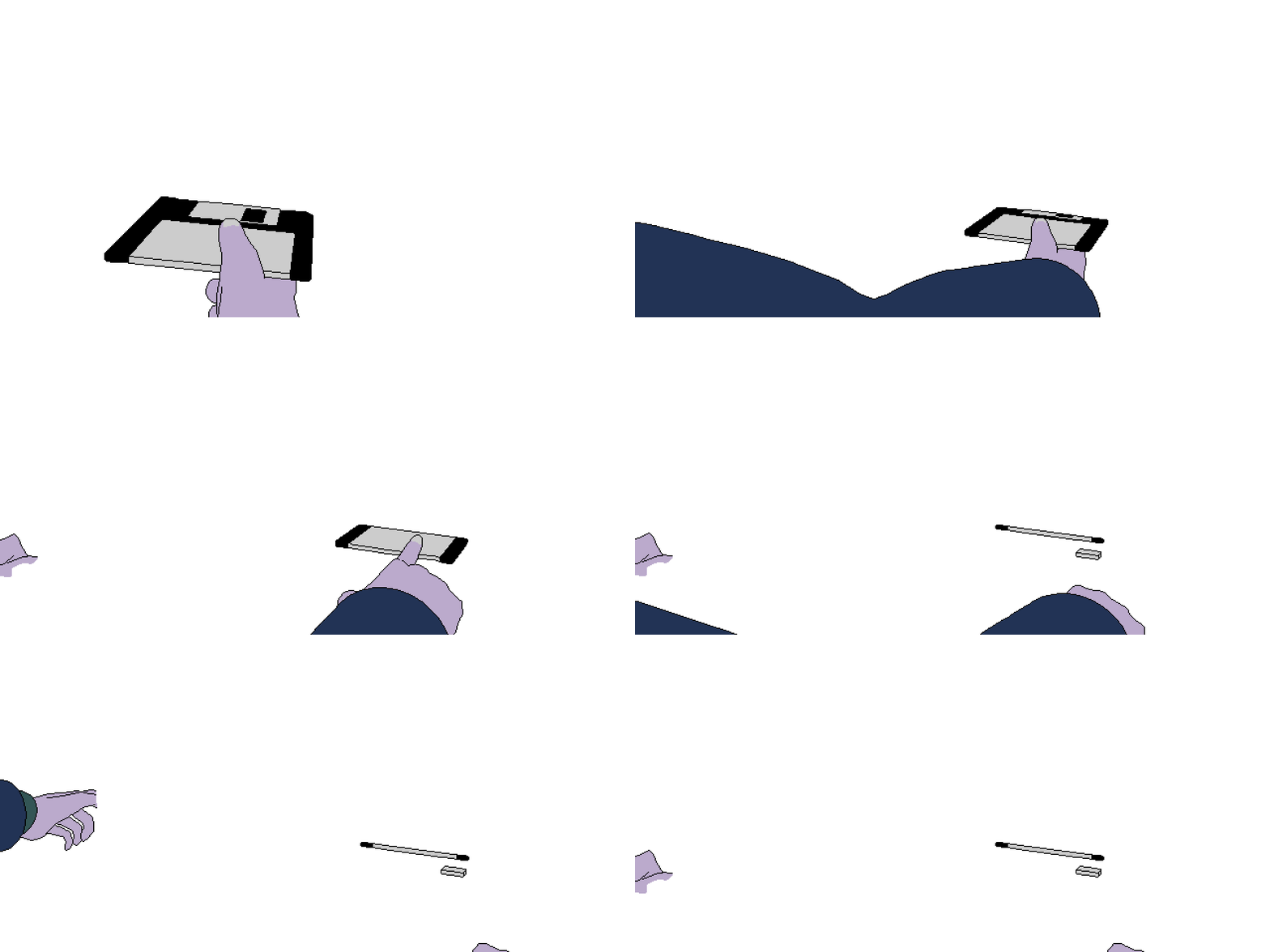
September 14th:
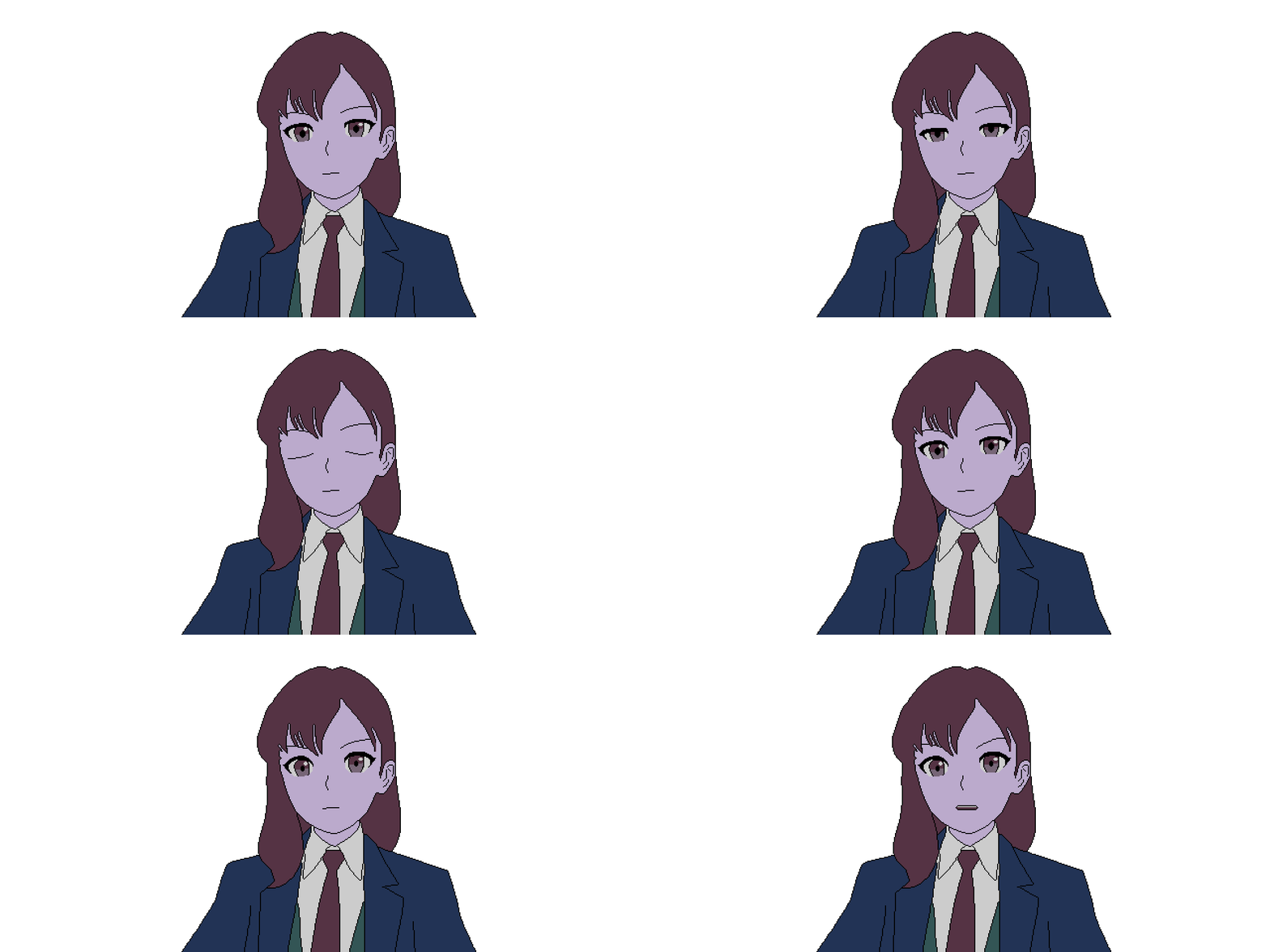
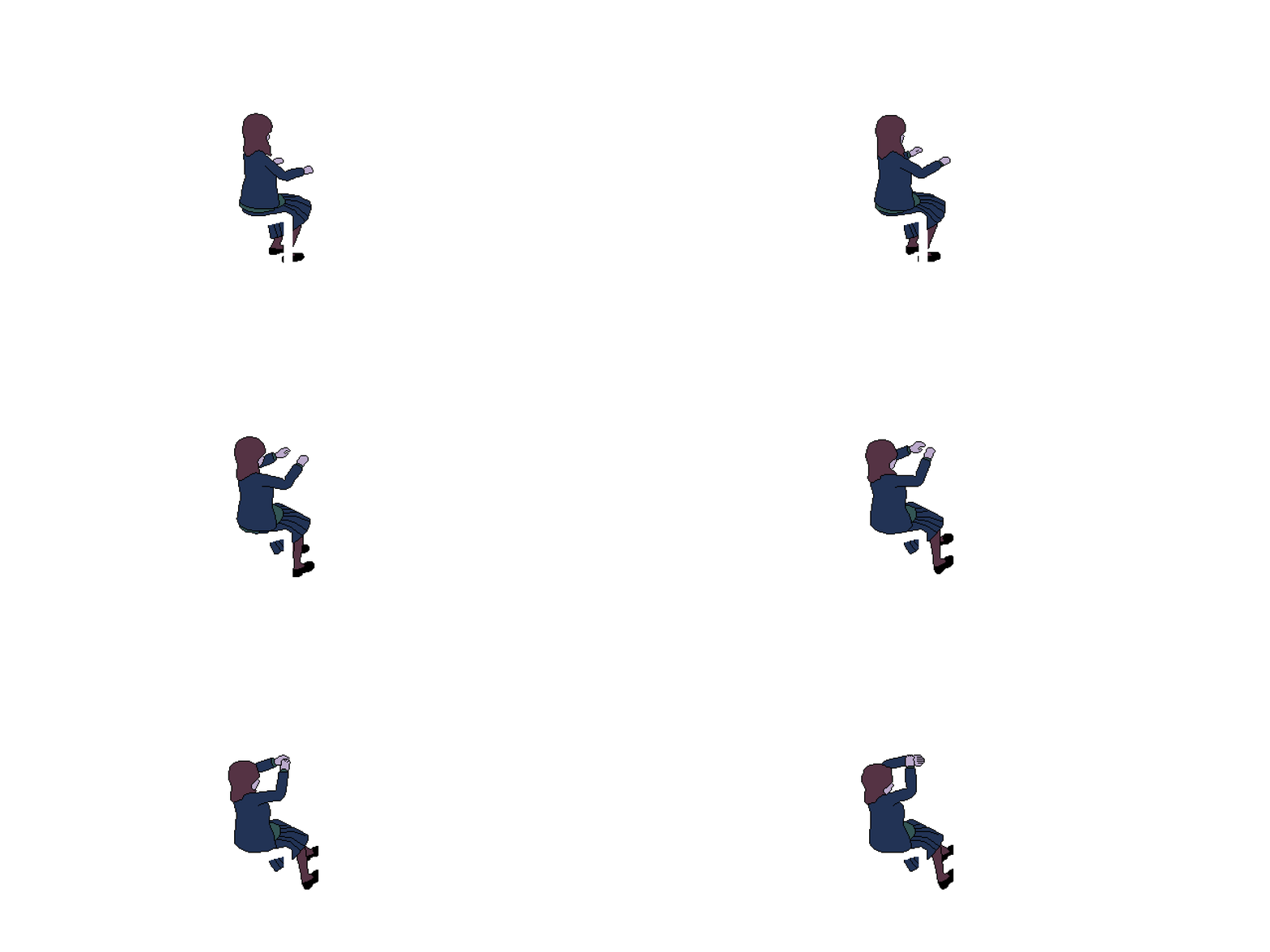
By this point, all 93 frames were pretty much complete. I left the duty of compositing the other shots to Natt, since he knew his way around Aseprite and it's dithering algorithms far better than I did. I didn't leave the crew empty handed though, as I created this concept for the final animation's flow also on September 14th, still following that C's Ware/Elf + Umemoto style we were imagining early on:
Natt finished quantization and compositing of all the frames on September 17th, by which point we could finally declare the visuals of the opening complete:
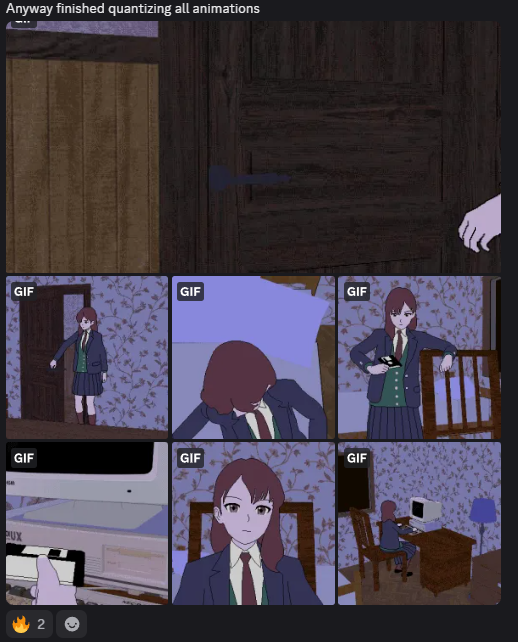
The same could not be said for the rest of the demo. Many of the effects were either very early in development or not implemented at all, and music was still at a complete standstill, with no instrumental in sight for the vocalists to build off of. All these things taken into account, I had no choice but to let the vocalists go on September 20th. We were incredibly fortunate to have the likes of Chiyoko join our group, as music composition could finally pick up some pace. I know it sounds nuts, but the vast majority of the demo was indeed produced in the final week and a half prior to the submission deadline! Most of the 2 month development cycle was spent on the opening and on experimenting with *some* of the effects.
That's all, folks! I hope you enjoyed this read covering one part of New Horizons' development cycle. The other contributors may or may not feel like making their own write-ups, so keep an eye out for that.